

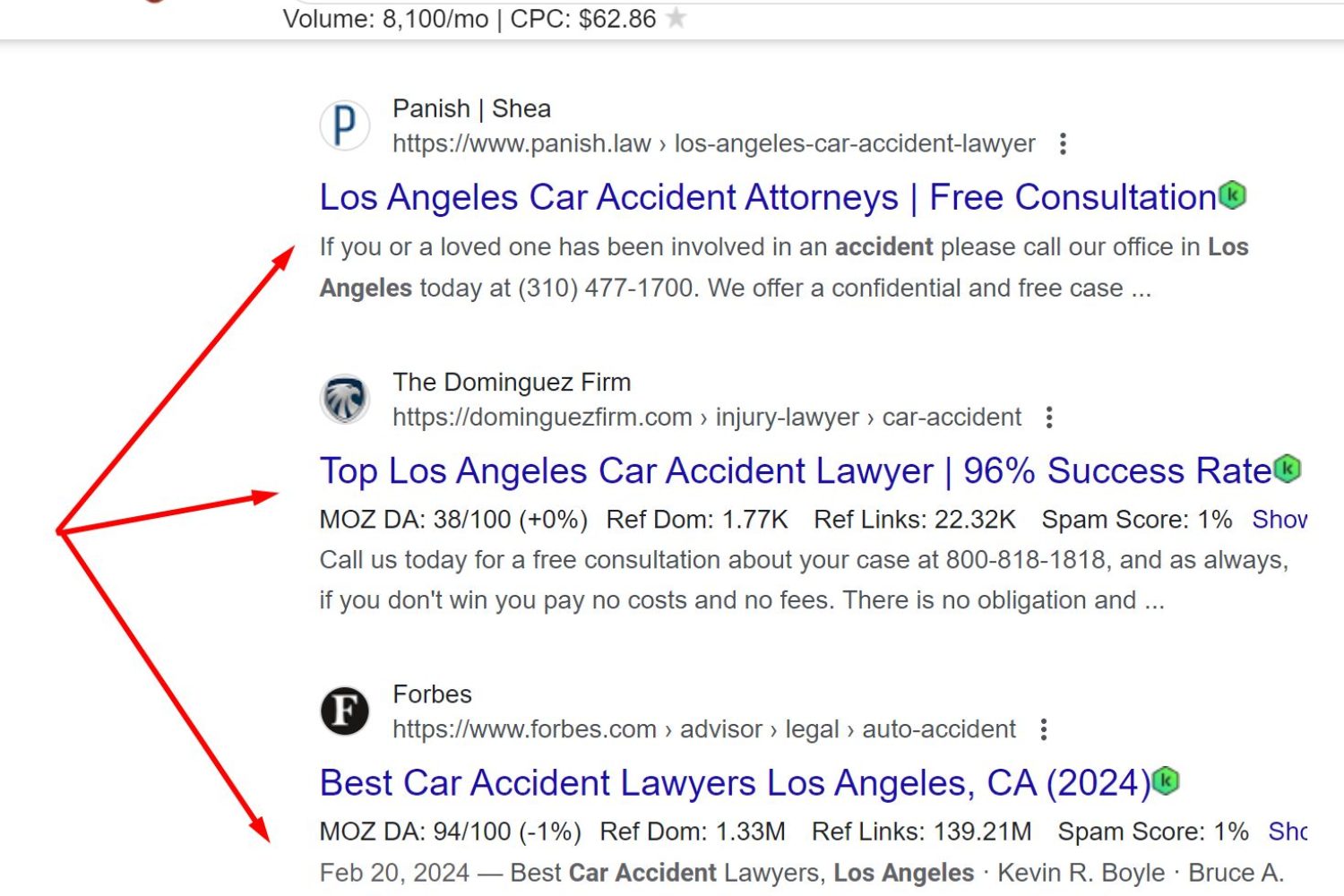
Is “car accident attorney Los Angeles” the same term as “Los Angeles car accident attorney“?
As a law firm marketing specialist agency, we understand the importance of keyword research. We meticulously craft the content around relevant keywords that potential customers might use to find your business. But sometimes, the line between similar keywords can get blurry. Do you need a dedicated page for every single variation, or is Google treating them as essentially the same thing?
Today, we’ll tackle the art of identifying keyword synonyms and how to optimize your content accordingly.
The Google Search Spy Game
Here’s the secret weapon in your keyword research arsenal: Google itself! Yes, the search engine giant holds the key to understanding how it interprets similar keywords. Here’s how you can play SEO detective:
The Search Term Showdown
- Conduct Separate Searches: Enter each keyword variation into Google separately. For example, if you’re trying to decide between “best law firm” and “top legal practice,” search for both terms individually.
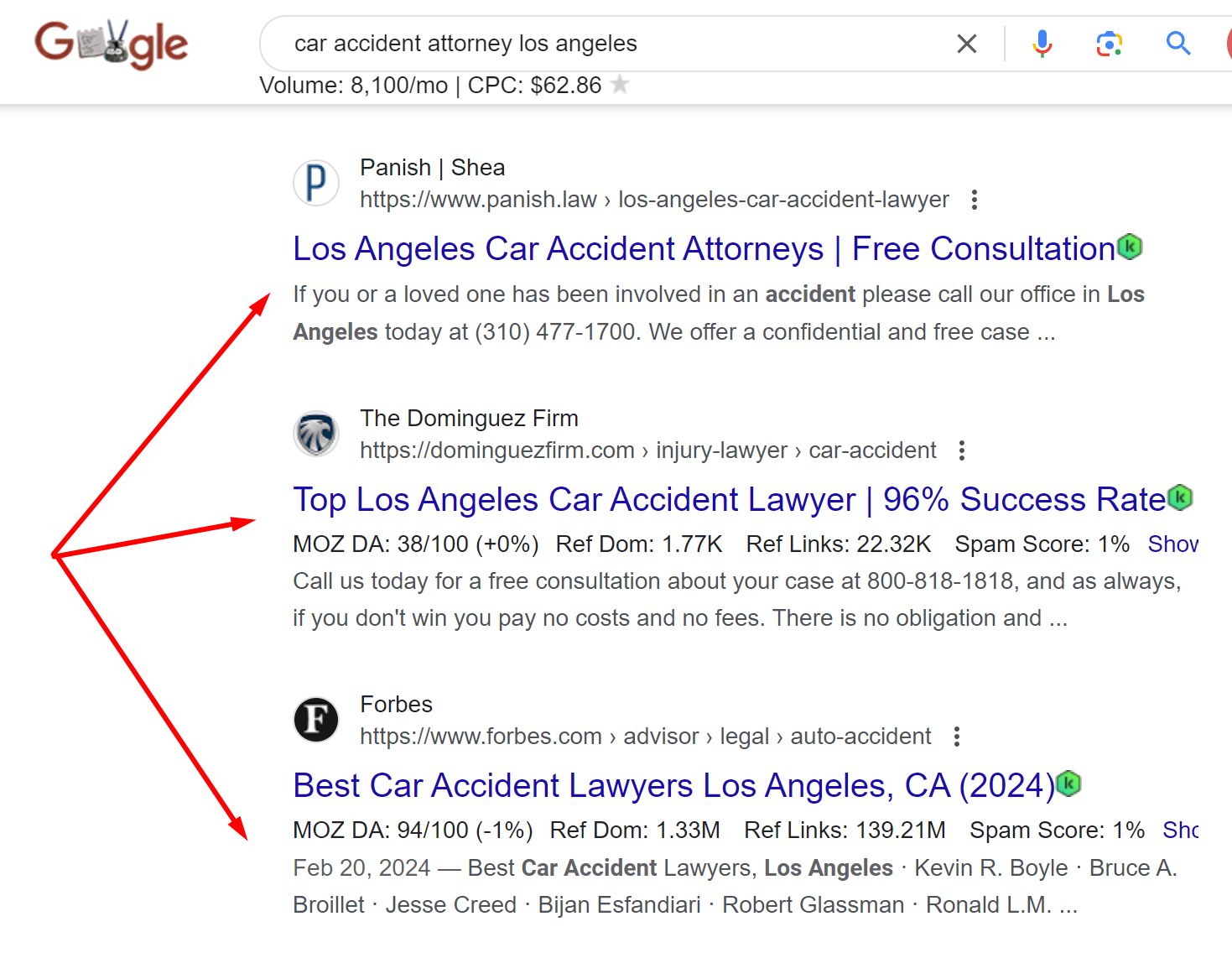
- Compare the Results: Take a close look at the search engine results pages (SERPs) for both queries. Do you see the same websites appearing in relatively the same positions for both searches? If the answer is yes, Google considers these keywords to be essentially the same.
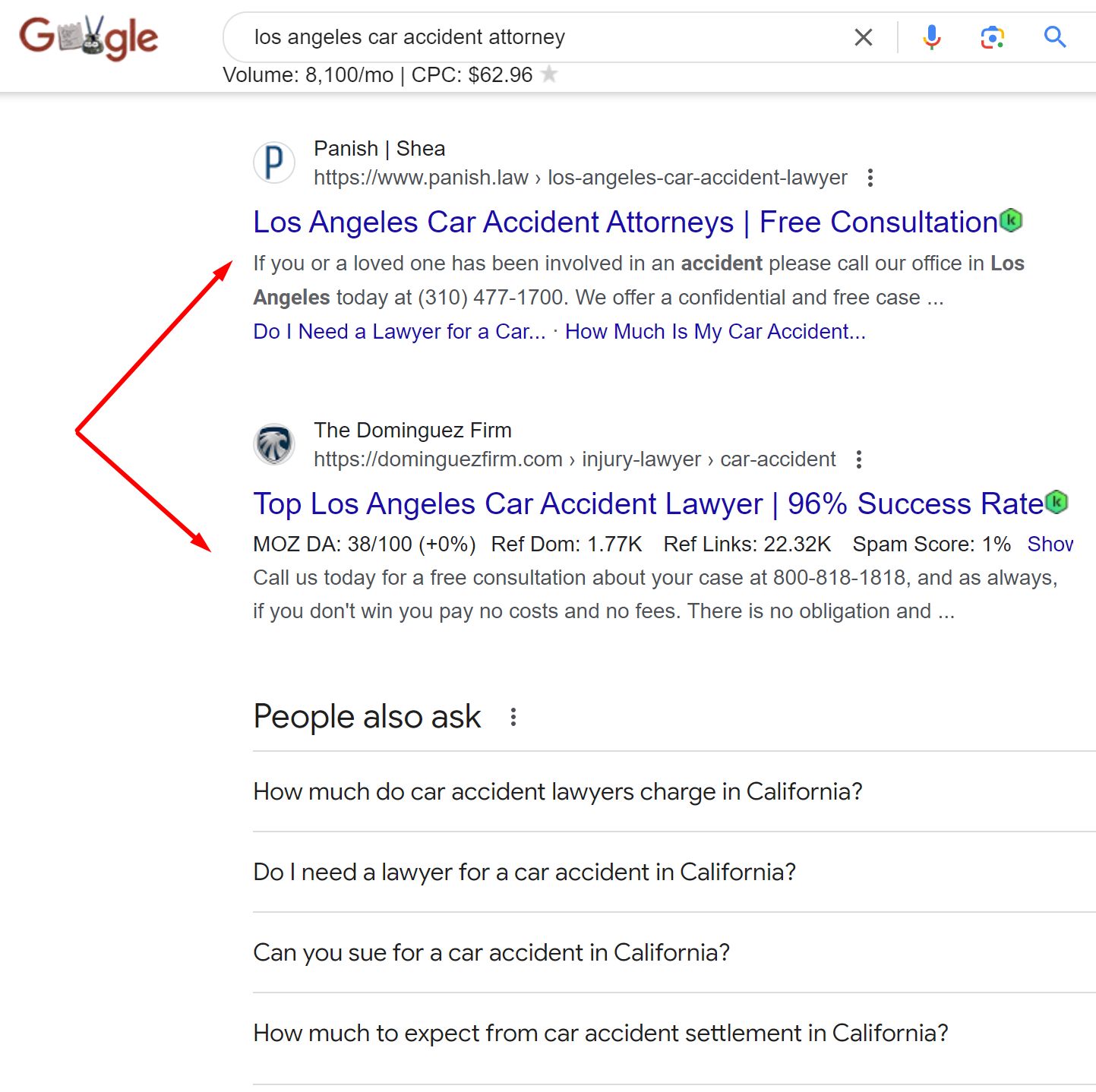
- Analyze SERP Features: Pay attention to any featured snippets, people also ask section and other SERP features. Are they showing similar content for both searches? This further confirms that Google sees these keywords as synonymous.
Why This Matters
Understanding whether Google views two keywords as the same can save you a lot of time and effort. Here’s why:
- Avoid Keyword Cannibalization: By knowing that Google treats certain keywords as the same, you can avoid creating multiple pages targeting the same search intent. This prevents your pages from competing against each other, which can dilute your SEO efforts.
- Focus on Quality Content: Instead of spreading your efforts thin by creating separate pages for each keyword variation, you can focus on creating a single, high-quality page that thoroughly addresses the search intent behind those keywords.
- Improved User Experience: A well-optimized page that covers a topic comprehensively provides a better user experience. Visitors are more likely to stay on your site longer and engage with your content, which can positively impact your rankings.
Real-World Example: Law Firm SEO
Let’s say you run a law firm. You want to rank for keywords like “best law firm” and “top legal practice.” After performing the Google Search Spy Game, you notice that the same firms rank for both keywords. This tells you that Google views them as equivalent.
With this insight, you can create one robust page optimized for both “best law firm” and “top legal practice,” incorporating variations naturally within the content. This approach not only saves you time but also helps you build a more authoritative and comprehensive page.
Conclusion
If you see the same websites ranking for both terms in relatively the same position, that means Google sees the keywords as the same term and you do not need to create separate pages for this keyword on your website.
As you can see from the images below, the results are the same for these two terms, so you wouldn’t need to create two pages for these keywords.
Confused about Keyword Cannibalization? Let’s chat about optimizing your website for local search terms like “Los Angeles car accident attorney”.